MLADU Supports RDCRN Data Sharing Objectives and Rare Disease Research Collaboration
Simplifying Secure, Auditable, and Scalable Data Sharing for Rare Disease Research Networks
The Rare Diseases Clinical Research Network (RDCRN) was established to accelerate rare disease research through collaboration, clinical studies, patient engagement, and data sharing across a network of research institutions, investigators, and patient advocacy organizations. The network supports hundreds of clinical sites and studies involving more than 280 rare diseases. Effective data sharing is central to the RDCRN mission.
As rare disease research continues to generate larger and more complex datasets, organizations need practical solutions that help them move, manage, govern, and share research data efficiently while supporting NIH and RDCRN data-sharing expectations.
This is where MLADU can help.
Understanding RDCRN Data Sharing Expectations
The RDCRN has published guidance and resources designed to encourage responsible data sharing across participating consortia and external collaborators. These resources emphasize several key principles:
- Secure sharing of research data
- Consistent data-sharing policies
- Data-use governance
- Data-use agreements
- Sharing of participant-level information after appropriate de-identification
- Data repository submission
- Data access review procedures
- Documentation of data-sharing activities
- Collaboration across institutions
- Alignment with NIH Data Management and Sharing policies
The challenge for many research organizations is not understanding the policy. The challenge is operationalizing it.
The Operational Challenge of Rare Disease Research Data Sharing
Rare disease research programs frequently involve:
- Multiple institutions
- Distributed investigators
- External collaborators
- Patient advocacy groups
- Cloud-based research environments
- Large genomic and clinical datasets
- Regulatory oversight
- Long-term data stewardship
As studies progress, data often needs to move between:
- Research institutions
- Clinical sites
- Cloud platforms
- Consortium partners
- Data coordinating centers
- Federal repositories
Manual transfer processes can create bottlenecks, increase risk, and consume valuable research resources.
MLADU Supports RDCRN Data Sharing Workflows
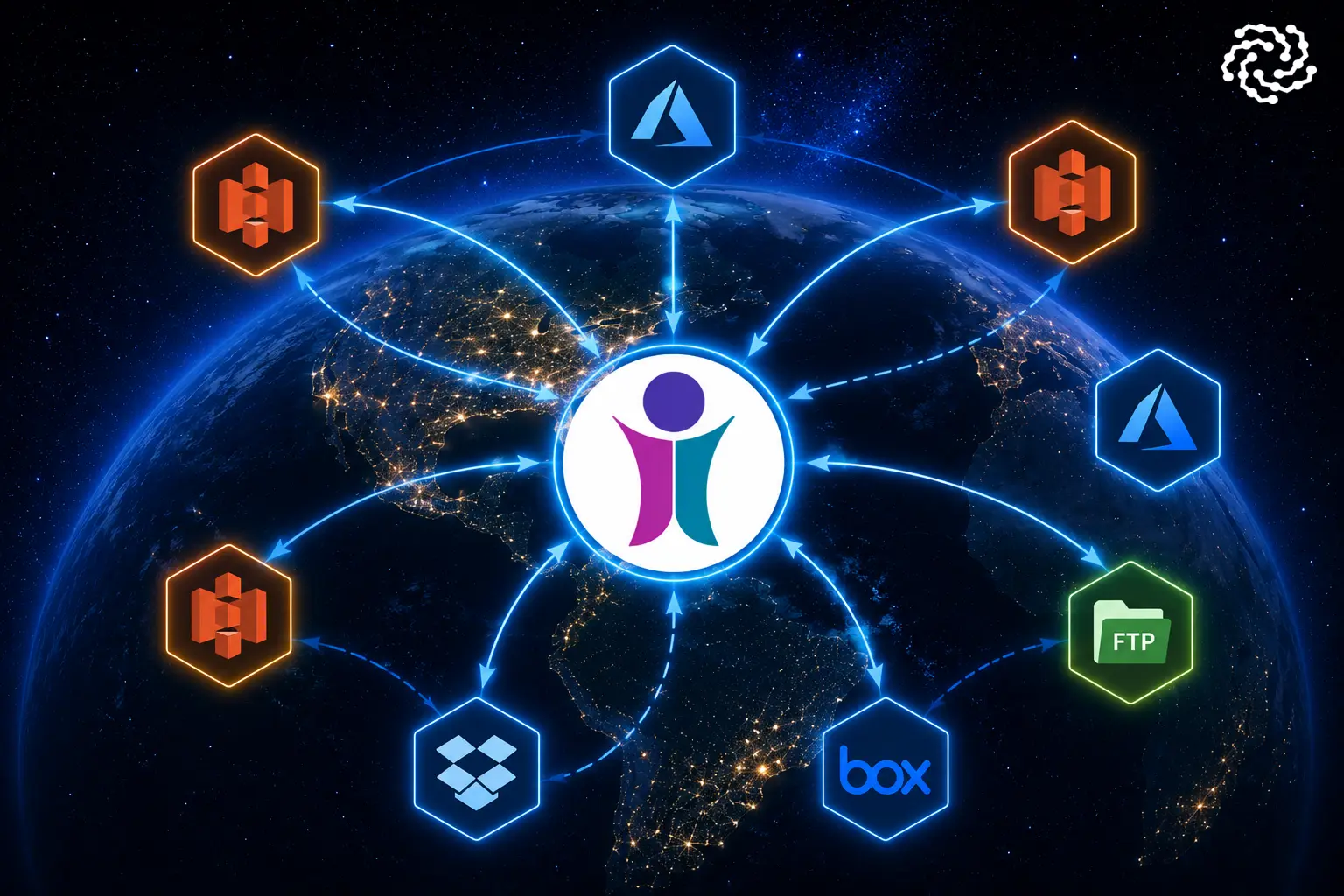
MLADU was designed specifically to simplify the movement of large datasets between organizations, storage systems, cloud environments, and research collaborators.
Supporting Multi-Institution Collaboration
RDCRN is fundamentally built on collaboration across participating institutions. Successful collaboration depends on the ability to share information efficiently and securely.
MLADU enables organizations to move data between:
- AWS S3
- Azure Blob Storage
- Box
- SFTP environments
- FTPS environments
- Research repositories
- Institutional storage systems
This allows participating organizations to exchange research data without requiring complex custom transfer infrastructure.
Supporting Data Governance
RDCRN guidance emphasizes the importance of consortium-specific data-sharing policies, data-use policies, and governance procedures.
MLADU helps support these governance objectives through:
- Role-based access controls
- Transfer approval workflows
- User activity auditing
- Access control auditing
- Transfer outcome tracking
Organizations maintain visibility into who performed actions, when they occurred, and what data was involved.
Supporting Data Use Agreement Workflows
RDCRN guidance highlights the importance of Data Use Agreements and related legal documentation when sharing information among participating organizations and external parties.
MLADU allows supporting documentation to be associated with data transfer activities, helping organizations centralize:
- Data Use Agreements
- Data Transfer Agreements
- Research approvals
- Security reviews
- Supporting screenshots
- Administrative documentation
This creates a more complete audit record around each transfer activity.
Supporting Auditability and Traceability
Rare disease research programs often require a clear record of how data moved through the research ecosystem.
MLADU maintains detailed audit histories covering:
- Transfer approvals
- Transfer events
- Data Station activities
- Data Set activities
- User actions
- Access control events
- Transfer outcomes
This helps organizations demonstrate accountability and maintain visibility throughout the data-sharing lifecycle.
Supporting Repository Submission Initiatives
RDCRN guidance discusses the importance of preparing and sharing datasets with designated repositories and supporting future data access requirements.
While repositories have their own ingestion requirements, MLADU helps solve a common operational challenge: moving large datasets to their intended destination quickly, securely, and with full auditability.
Organizations can focus on research and data preparation rather than spending weeks managing transfer logistics.
Supporting NIH Data Management and Sharing Objectives
RDCRN data-sharing guidance is closely aligned with broader NIH Data Management and Sharing expectations.
These objectives include:
- Data accessibility
- Data stewardship
- Responsible sharing
- Reproducibility
- Collaboration
- Long-term research value
MLADU supports these goals by helping organizations move large datasets efficiently while maintaining governance and accountability throughout the transfer process.
Supporting FAIR Data Principles
The RDCRN Data Management and Coordinating Center emphasizes cloud-based infrastructure, data standards, and data sharing to advance rare disease research.
MLADU complements these objectives by helping organizations support FAIR data principles:
Findable
Data Sets and Data Stations provide organizational structure and visibility.
Accessible
Authorized users can securely transfer and access data across supported platforms.
Interoperable
MLADU facilitates movement between diverse storage systems and cloud providers.
Reusable
Audit histories, transfer verification, and documentation help support long-term data usability.
Built for Large Research Data Sets
Rare disease research increasingly generates:
- Genomic sequencing data
- Imaging data
- Clinical research data
- Biomarker datasets
- Multi-omics datasets
Many of these datasets measure in terabytes rather than gigabytes.
MLADU was built specifically for large-scale research data movement, helping organizations transfer massive datasets without requiring local downloads, manual chunking, or custom scripting.
Accelerating Rare Disease Research Through Better Data Mobility
The RDCRN mission depends on collaboration, data sharing, and scientific discovery.
Researchers should spend their time advancing science, not troubleshooting file transfers.
MLADU helps organizations simplify the operational challenges associated with moving, governing, documenting, and auditing research data across complex research ecosystems.
Whether your organization participates in the RDCRN, collaborates with rare disease researchers, or supports NIH-funded research initiatives, MLADU provides a scalable platform for secure and auditable data movement.
Learn How MLADU Supports Rare Disease Research Data Sharing
Schedule a personalized demonstration to see how MLADU can help your organization simplify research data transfers, strengthen governance, improve auditability, and support modern data-sharing initiatives.
Move research data faster. Strengthen collaboration. Support rare disease discovery with MLADU.
Topics
ON THIS PAGE
ASK A QUESTION
Can't find what you're looking for? Our team is here to help.


Try MLADU Free
Experience the power of AI powered data transfers.

No credit card required